
How to fix SKU Errors
Fix listings that EMMA could not import: empty, duplicate or invalid SKUs, Virtual SKU clashes, and stock tracking left off on Shopify or WooCommerce. Covers the suggested fixes EMMA shows for each listing.
EMMA links your listings across platforms by their SKU, so a product sold on Shopee and Lazada is recognised as the same product when both listings carry the same SKU. Every listing needs a SKU that is filled in, unique within its shop, and free of invalid characters. Stock tracking also needs to be on for the listing. A listing that fails any of these checks is not imported and is left out of the sync until it is fixed.
Where to see which listings were not imported
When any listings were not imported, a yellow chip appears under the Inventory Overview title, for example 2 listings not imported.

Click the chip to open the list of listings that were not imported. They are grouped by shop and by problem, so a SKU used by two listings shows as one group. When you sell on more than one shop, the chips across the top filter the list to one shop.
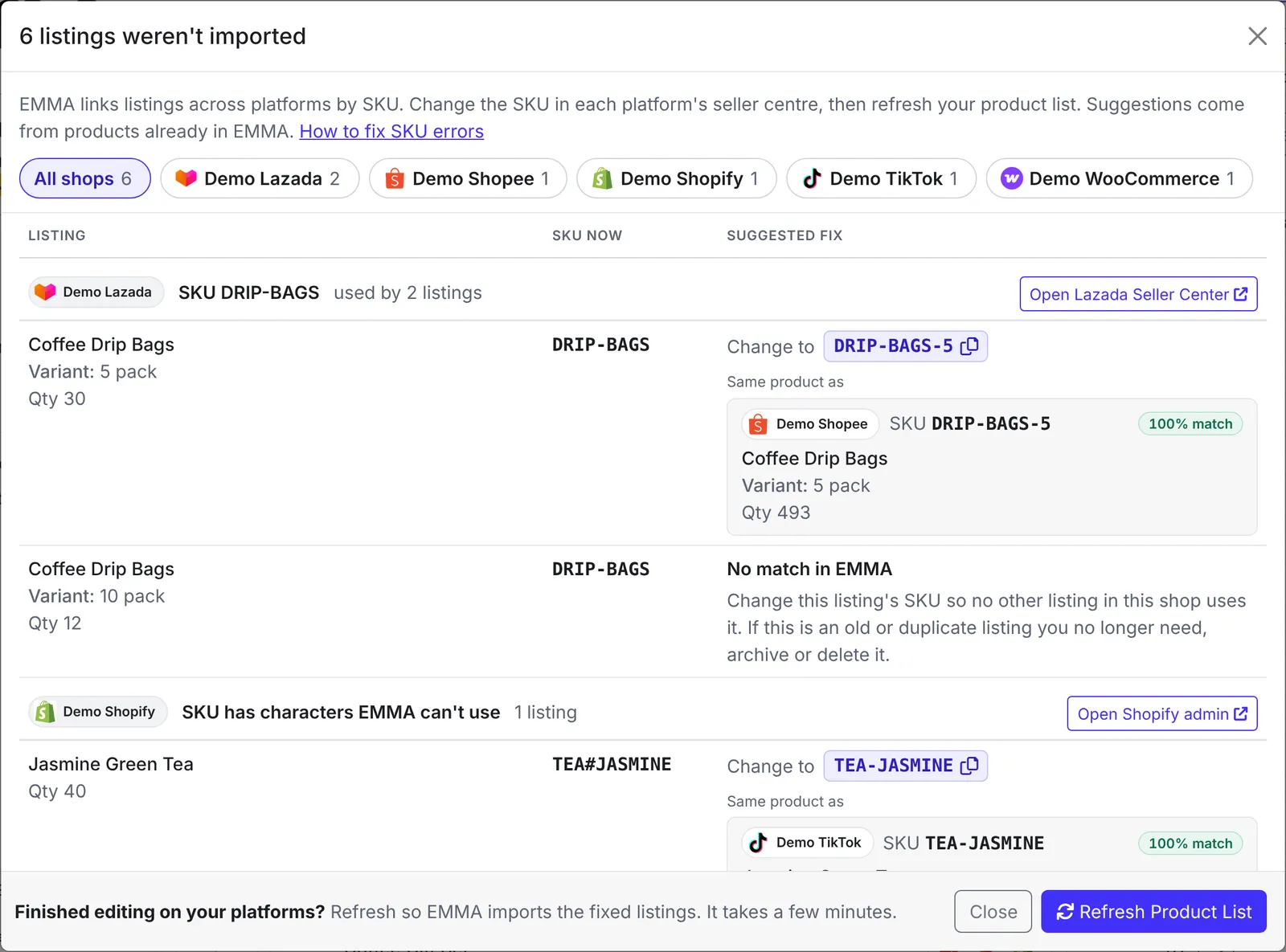
Each row shows:
- Listing: the product name, the variant and the quantity on that shop, so you can find it in your seller centre.
- SKU now: the SKU the listing has today, or Empty.
- Suggested fix: what to change, explained below.
Each group also has a button that opens that platform’s seller centre, so you can go straight to the listing.
Suggested fixes
EMMA compares each listing that was not imported with the products you already have in EMMA, by product and variant name. When it finds the same product, it tells you which SKU to use:
- Change to or Set to a SKU, with the product it matched and a match score. Copy the SKU with the copy button, paste it into the listing on your seller centre, and the listing links to that product on the next refresh.
- Keep a SKU, when several listings share one SKU and this one already matches the product that uses it. Change the other listings in the group instead.
- Possibly the same product as the following, when the match is weaker or two products are equally close. Check that it really is the same product before you use the SKU, and pick the right one when two are shown.
- No match in EMMA, when nothing is close enough. The row tells you what to do for that kind of problem.
Only use a suggested SKU when it is the same product. If two different products share a SKU, EMMA treats them as one and syncs their stock together.
If you no longer sell a product, you do not have to fix its SKU. Archive or delete the listing on the platform instead, and it drops off the list on the next refresh. On Shopify, you can also tell EMMA to ignore archived products.
The types of SKU problems
Missing SKU
Every listing, and every variation of a listing, needs a SKU. Without one EMMA cannot tell which product it is. Product names and prices cannot be used instead, because they often differ from one platform to another.
How to fix it: add the SKU this product uses on your other platforms. If it is only sold on this one platform, make up a new SKU that no other listing in the shop uses.
Duplicate SKU
Two or more listings in the same shop use the same SKU, so EMMA cannot tell which one to sync. A common cause is a SKU that is only spaces, or the word “None”. Another is an old copy of a listing that was never deleted.
How to fix it: give each listing its own SKU. If one of them is an old or duplicate listing you no longer need, archive or delete it instead.
SKU has characters EMMA can’t use
For system stability and security, a SKU can only use:
- letters and numbers (a to z, A to Z, 0 to 9)
- spaces
- round brackets ( )
- underscores _
- hyphens -
How to fix it: change the SKU to remove any other character, such as / or #. For example, MUG/RED#SET could become MUG-RED-SET.
SKU clashes with a Virtual SKU
The listing uses the same SKU as one of your Virtual SKUs.
How to fix it: rename the listing’s SKU, or delete the Virtual SKU from the Sales Channels tab if you no longer need it.
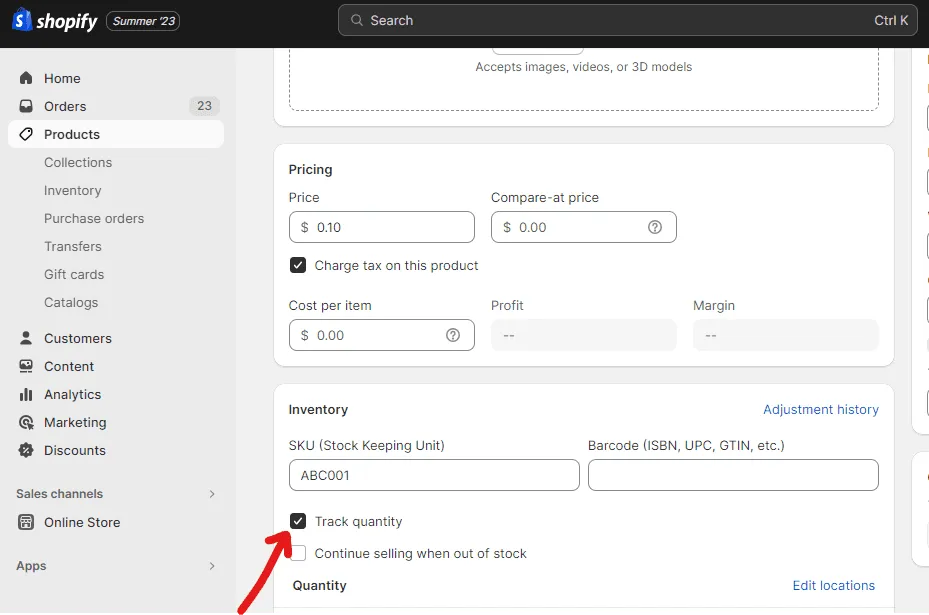
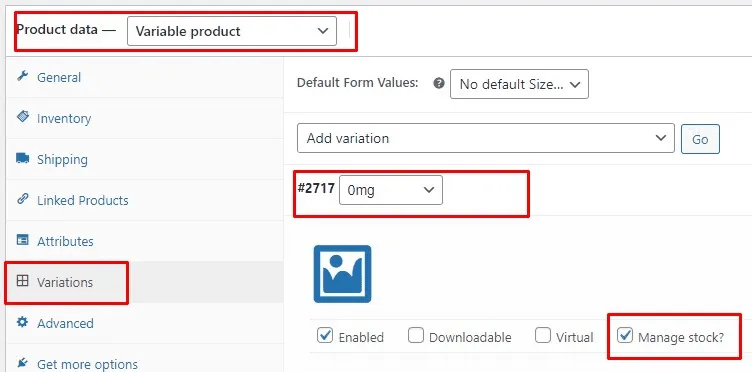
Stock tracking is off (Shopify and WooCommerce)
The SKU is fine, but the platform is not counting stock for this listing, so EMMA has nothing to sync. Most marketplaces track stock by default. Shopify and WooCommerce let you turn it off for each product.
How to fix it: open the product on the platform and turn stock tracking on.
On Shopify, tick Track quantity:
On WooCommerce, tick Manage stock? in the product’s Inventory tab:
Editing a SKU on your platform
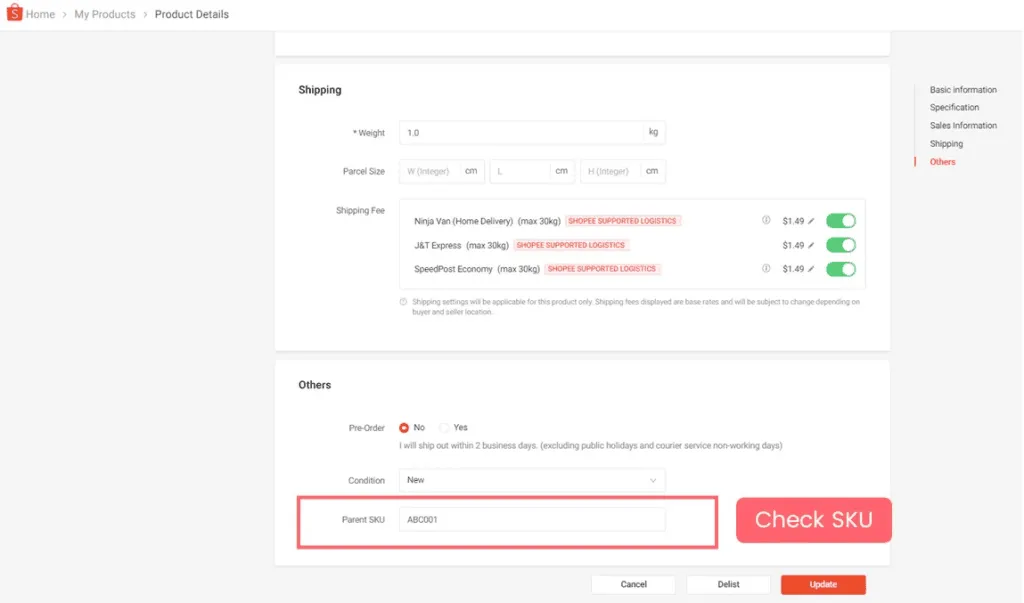
SKUs are changed on each platform’s own seller centre or admin, usually on the product’s edit page. The example below is Shopee Seller Centre.
Products without variations
Fill in the Parent SKU field at the bottom of the product page:
Products with variations
Each variation has its own SKU in the variations table:
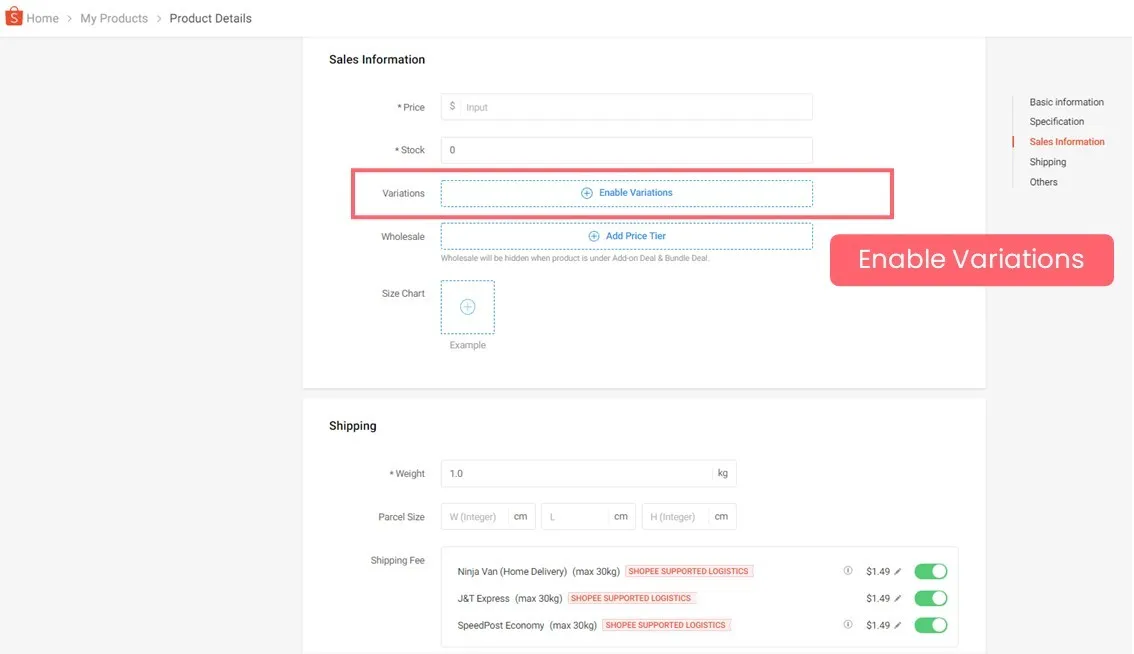
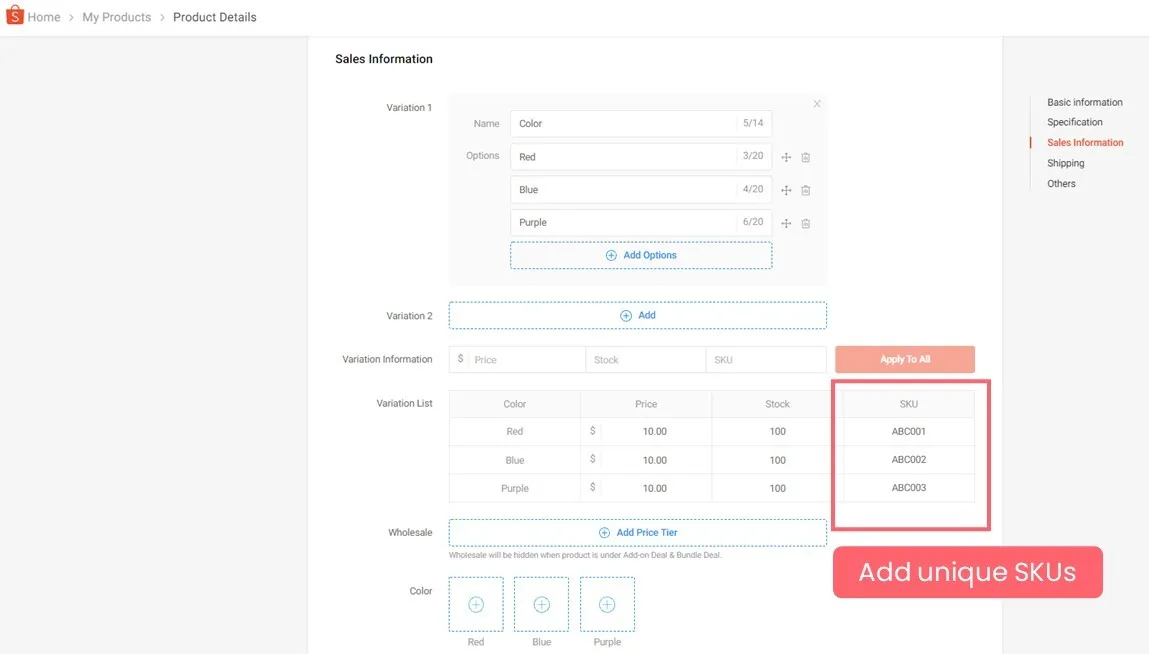
Make sure each variation has its own valid SKU.
Refresh your product list
EMMA only sees your changes after it reads your products again. When you have finished editing, click Refresh Product List, either at the bottom of the window or at the top right of the Inventory Overview page. The refresh takes a few minutes, and you get a notification when it finishes. EMMA also refreshes your product list automatically every day at 3AM.
Repeat until the chip is gone. A listing that is still not imported stays out of the sync.